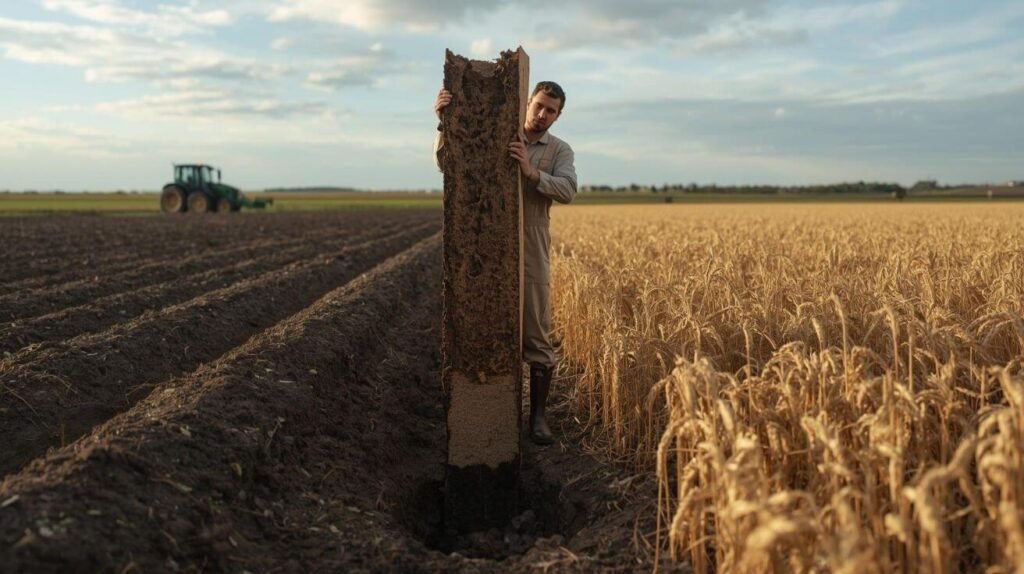
Beneath vast plains stretching across Eastern Europe and Central Asia lies one of the planet’s most valuable natural assets: chernozem, often called the “black gold of agriculture.” Reaching depths of up to one meter, this nutrient-rich soil has powered some of the world’s largest grain exports and transformed entire nations into agricultural superpowers.
Found extensively across Ukraine, Russia, and Kazakhstan, chernozem contains exceptionally high levels of humus — the organic matter that enhances soil fertility, moisture retention, and crop yields.

Why Chernozem Is So Valuable
Unlike many agricultural soils that require heavy fertilization, chernozem naturally supports high productivity. Its dark color comes from dense organic carbon content built up over thousands of years under grassland ecosystems.
Key Characteristics of Chernozem:

| Feature | Description |
|---|---|
| Depth | Up to 1 meter |
| Organic Content | Extremely high humus concentration |
| Water Retention | Strong moisture-holding capacity |
| Primary Crops | Wheat, corn, barley, sunflower |
| Global Role | Major grain export foundation |
This soil belt has helped make the region one of the largest wheat exporters in the world — a factor that directly impacts food prices across North America and Europe.
Global Food Security Implications
Grain harvested from chernozem-rich regions feeds hundreds of millions globally. When supply chains are disrupted — whether by conflict, sanctions, or climate extremes — markets in the US, UK, and Canada feel the ripple effects through rising food prices and commodity volatility.

Agricultural analysts often describe this soil zone as one of the world’s most strategically important food production corridors.
Environmental and Climate Pressures
Despite its natural fertility, chernozem is not invincible. Intensive farming, erosion, and climate change threaten long-term productivity. Soil degradation could reduce yields and destabilize global grain supply.

Sustainable practices such as no-till farming and crop rotation are increasingly promoted to preserve this irreplaceable resource.
The Bigger Picture
Chernozem is more than soil — it is a geopolitical asset. Its depth, fertility, and scale have shaped global agriculture for centuries and continue to influence food security in 2026.

As climate pressures intensify, protecting the world’s “black gold” may become just as critical as securing energy or water supplies.