Winter roads and sidewalks can be deceptively dangerous. Black ice — thin, transparent ice often invisible to the eye — is a leading cause of slips, falls, and vehicle accidents across North America and Europe each winter. Knowing how to spot and navigate it can save lives and prevent injuries.
9 Smart Ways to Stay Safe on Ice
| Tip | How It Helps |
|---|---|
| 1. Wear Proper Footwear | Shoes with good tread reduce the risk of slipping on icy surfaces. |
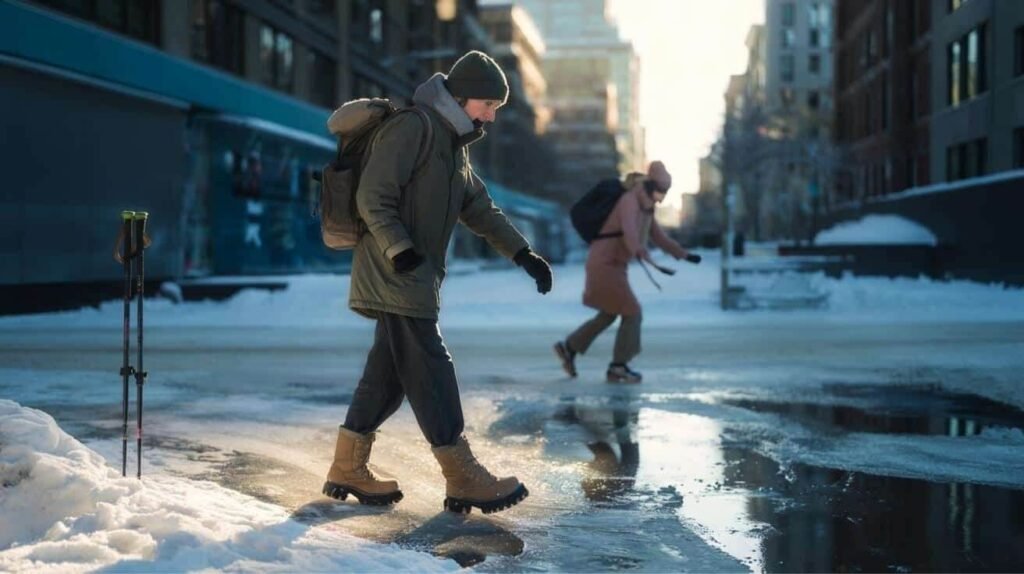
| 2. Walk Like a Penguin | Keep your center of gravity low, take small steps, and bend knees slightly. |
| 3. Use Handrails | Always hold onto stairs or ramps when available. |
| 4. Avoid Sudden Movements | Quick turns or stops increase the chance of falling. |
| 5. Apply Salt or Sand | On your property, spreading grit improves traction and reduces ice formation. |
| 6. Test Surfaces | Tap the ground lightly with a foot or stick before stepping on shiny surfaces. |
| 7. Keep Hands Free | Avoid carrying heavy loads; hands help maintain balance if you slip. |
| 8. Drive Slowly and Carefully | Reduce speed and increase following distance; braking on black ice is hazardous. |
| 9. Use Ice Grips or Traction Devices | Clips or chains for shoes or tires add grip in extreme conditions. |
Why Black Ice Is So Dangerous
Unlike snow, black ice blends with pavement, making it almost invisible. Temperatures around freezing, especially overnight or in shaded areas, create ideal conditions for its formation. Even experienced drivers and pedestrians are at risk without proper precautions.

Regional Considerations
In the USA, icy conditions are common in the Midwest and Northeast. Canada faces similar risks across the Prairie provinces and southern Ontario. In the UK, sudden black ice events can appear in urban areas after freezing rain, particularly on bridges and shaded roads.
The Bigger Picture
Preparation and awareness are the most effective defenses against black ice. By combining cautious movement, proper equipment, and environmental awareness, individuals can significantly reduce accidents during winter months — keeping both themselves and others safe on snow-covered streets and paths.