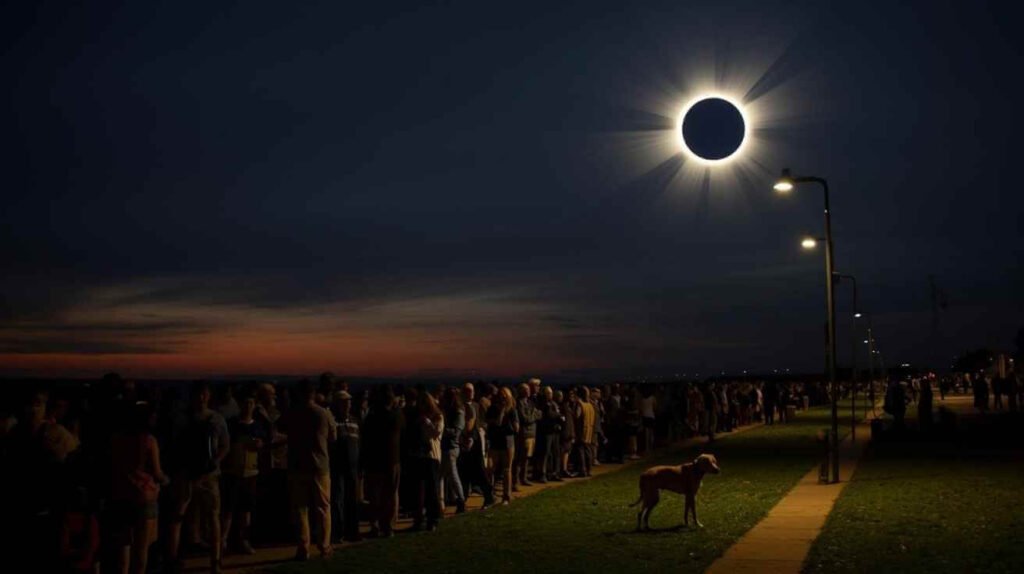
A cluster of unusual atmospheric signals detected in early February is raising fresh concern among climate scientists, who warn that Arctic marine mammals could face mounting stress if current patterns persist.
Meteorologists monitoring high-latitude circulation patterns say the Arctic is experiencing temperature and pressure anomalies that deviate sharply from seasonal norms. While short-term fluctuations are not uncommon, the intensity and timing of this year’s signals have prompted closer scrutiny.

What Scientists Are Seeing
Researchers point to disrupted polar air circulation, above-average surface temperatures, and accelerated sea ice thinning in key marine habitats. Early February is typically a period of relative winter stability, but 2026 has brought rapid shifts in wind patterns and warm air intrusions.
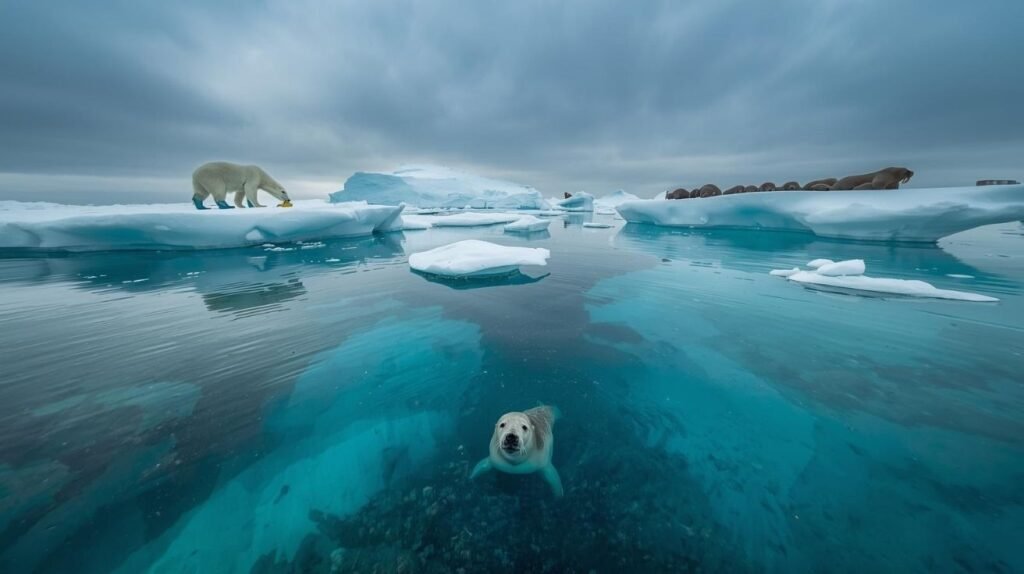
These changes matter because Arctic marine mammals including seals, walruses, and several whale species rely heavily on stable sea ice for breeding, feeding, and protection from predators. Even temporary ice instability during critical seasonal windows can have cascading biological effects.

Scientists emphasize that while a single atmospheric event does not define long-term climate outcomes, the frequency of mid-winter disturbances appears to be increasing.
Why Marine Mammals Are Vulnerable
Sea ice is more than frozen water — it is infrastructure for Arctic ecosystems. Ringed seals use it for pupping, walruses depend on it as resting platforms between feeding dives, and polar predators rely on predictable ice edges for hunting.

When ice forms later, melts earlier, or fractures unpredictably, energy demands rise. Animals must travel farther for food, expend more energy, and face higher exposure risks.
Biologists are particularly concerned about cumulative stress. Repeated seasonal disruptions reduce reproductive success and increase mortality risk over time.

A Broader Climate Signal?
Atmospheric researchers note that the Arctic continues to warm faster than the global average — a phenomenon known as Arctic amplification. Sudden stratospheric warming events and weakened polar circulation patterns may be contributing to unstable surface conditions.
Whether the current signals translate into measurable ecological impact will depend on how long the anomalies persist through late winter.

For now, monitoring stations remain on high alert. Scientists say the coming weeks will be critical in determining whether this is a short-lived disturbance or another sign that Arctic systems are entering a more volatile era.