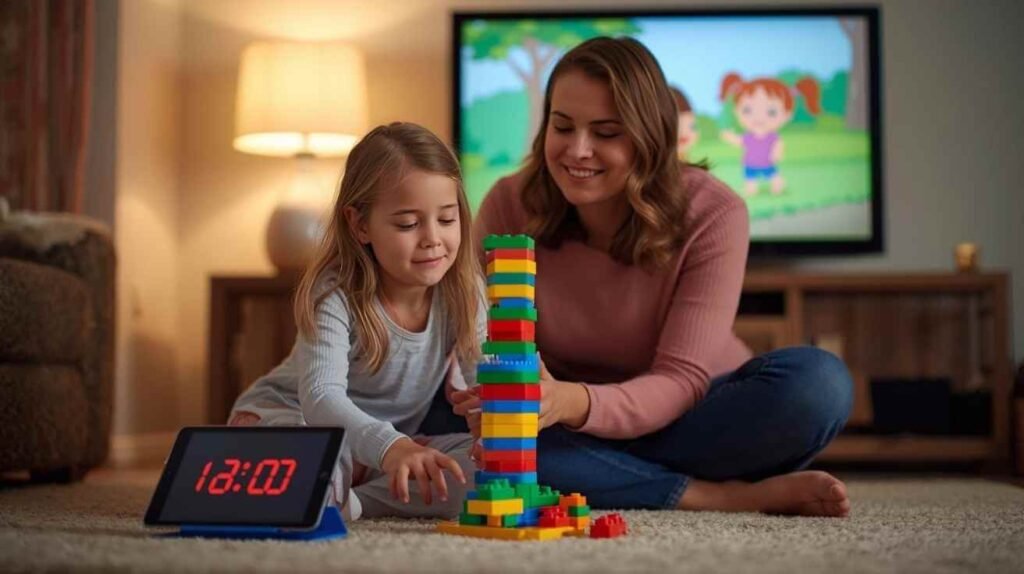
A provocative parenting idea gaining traction online suggests that children as young as five should decide their own bedtime and screen usage. Advocates claim strict household rules may contribute to anxiety and reduced independence later in life. However, child development specialists and pediatric experts caution that the science behind such claims is far from straightforward.
Where the Argument Comes From
Supporters of relaxed schedules argue that early autonomy can:
- Encourage decision-making skills
- Reduce power struggles at home
- Foster a sense of responsibility
Some psychologists acknowledge that age-appropriate choices can strengthen confidence, particularly when guided rather than imposed.
What Research Actually Shows
Experts emphasize that structure and consistency remain critical for young children. Studies in sleep science and pediatric health consistently link predictable routines with:
- Better emotional regulation
- Improved cognitive performance
- Healthier growth and immune function
Sleep deprivation in early childhood is associated with attention difficulties, mood instability, and learning challenges.
Bedtime: Why It Matters
Pediatricians highlight that five-year-olds typically require 10–13 hours of sleep per night. Allowing unrestricted bedtimes can lead to:
- Chronic sleep deficits
- Increased irritability and stress
- Disrupted school performance
While flexibility can work occasionally, completely removing boundaries is generally discouraged.
Screen Time: Balance Over Freedom
Health authorities recommend moderated screen exposure for young children due to links with:
- Sleep disruption from blue light
- Reduced physical activity
- Overstimulation and behavioral issues
Rather than total freedom, experts favor co-viewing, time limits, and content supervision.
The Anxiety Claim Under Scrutiny
The assertion that “strict parents raise anxious adults” lacks universal scientific consensus. Psychologists differentiate between:
- Authoritative parenting (structured but supportive) — linked to positive outcomes
- Authoritarian parenting (rigid, punitive) — sometimes associated with stress
It is the quality of emotional support, not merely rule enforcement, that strongly influences long-term wellbeing.
What Specialists Recommend
Child development experts suggest a balanced approach:
- Provide routines for sleep and technology
- Offer limited choices within boundaries
- Adjust rules as maturity develops
- Maintain warmth, communication, and predictability
Final Takeaway
The idea of granting full control over bedtime and screen time at age five may sound empowering, but research strongly supports the benefits of structure in early childhood. Healthy development appears best served by combining consistent boundaries with empathy and gradual autonomy — not by eliminating rules altogether.






![[Analysis] FDI Frigate The Combat-Ready Solution That Could Reshape the Swedish Navy](https://pioneergasltd.co.uk/wp-content/uploads/2026/02/Analysis-FDI-Frigate-The-Combat-Ready-Solution-That-Could-Reshape-the-Swedish-Navy-1024x574.jpg)